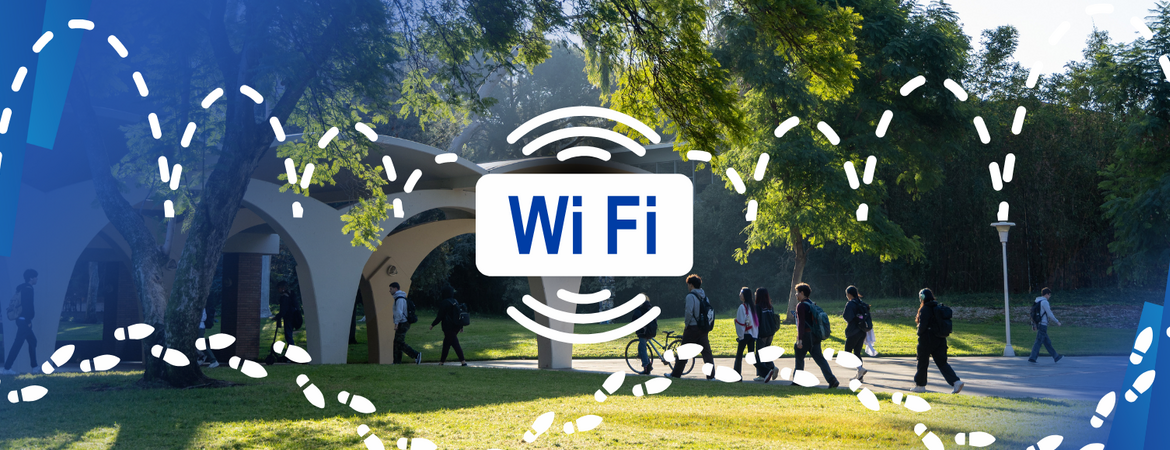
Seamless digital connectivity powers every aspect of campus life at UC Riverside. To strengthen this crucial infrastructure, Information Technology Solutions (ITS) rolled out the Campus WiFi Assessment Initiative in January 2026. Through a systematic, multi-month walking tour of over 130 campus buildings, ITS mapped the signal environment and assessed connectivity in the physical spaces where Highlanders teach, learn, and work.
Walking the Walk: Assessing Campus Spaces
To capture true network performance, testing must occur under real-world conditions — including when rooms are occupied, as the human body can naturally absorb or deflect WiFi signals. ITS network operations and support staff have logged significant steps to complete this task, quietly measuring network traffic patterns and signal density across UCR's spaces without interrupting lectures or monitoring personal data.
In the first month alone, the eight-member team dedicated approximately 576 man-hours to cover 37 floors across 12 buildings, walking each space twice for accuracy. As the initiative progressed, the team expanded their reach. By July 2026, ITS had walked twice and assessed more than 130 buildings — and yes, this also meant walking outdoor spaces in the summer heat!
The data collected from these extensive walkthroughs allowed the team to perform approximately 300 minor network configuration adjustments.
Thank You for Your Partnership
The success of the WiFi Assessment Initiative relies heavily on proactive campus partnerships. Building and space coordinators, faculty, and researchers have worked closely with ITS to ensure proper access to various research and administrative spaces.
A notable collaboration occurred during spring break, when ITS partnered with Auxiliary Services' Residential Technology Analyst, Jeff Jumarang. Over the course of a single week, the team assessed critical, highly utilized student housing areas, including the Pentland Hills, Aberdeen-Inverness, Glen Mor, and Lothian Residence Halls, ensuring that Highlanders living on campus receive optimal connectivity.
Uncovering and Addressing Unwanted “Noise”
As the walkthroughs progressed, the assessment uncovered hundreds of rogue access points (APs) across campus. In the UCR environment, a rogue access point is any unauthorized wireless transmitter connected to the network, such as personal home routers or WiFi direct printers.
While these devices may seem convenient, they often cause significant radio frequency (RF) interference. This interference acts as "noise" that drowns out the official campus WiFi, leading to dropped connections, slower speeds, and potential security vulnerabilities. To ensure clear airwaves for high-quality, secure connectivity, ITS is diligently collaborating with building coordinators and unit heads to identify and disable these standalone broadcasts.
Looking Ahead
The WiFi assessment walks were completed this summer. ITS’ network operations and support staff are preparing the final report for each campus space assessed, which will be released before the end of the year. The team is developing reports using the assessment walk data for each building, documenting the minor changes made, and providing recommendations to improve coverage. Consultations with building owners will be scheduled on an as-needed basis.
For more information on the Campus WiFi Assessment Initiative, read the series in the ITS Blog or contact ITS online at its.ucr.edu/help or via phone at 951-827-4848.
Let us help you with your search